Small Town Living Magazine's Feb/March 2008 issue is out, and it features an article (written by ???) about catfish...how farm-raised catfish got its start in the U.S. and how it has impacted my hometown of Greensboro, Alabama.
There are catfish recipes too, some of which I have shared on this blog and some which are new.
They were contributed by hometown folks who have been cooking catfish for a long time.
This huge, 60-page edition, includes lots of other interesting articles and how-to ideas.
Surf on over to stliving.net and check it out. It's published by none other than the wonderfully creative Garden Goose and her talented husband Paul.
Showing posts with label Greensboro Alabama. Show all posts
Showing posts with label Greensboro Alabama. Show all posts
Thursday, January 31, 2008


Sunday, December 2, 2007
Colonel Stephens' Christmas Trees and Catfish
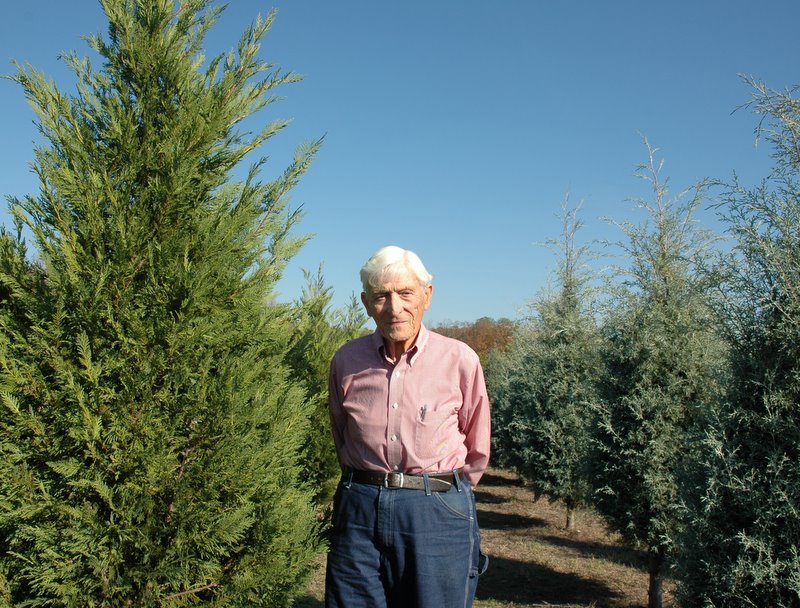 You know it’s almost Christmas when it’s time to cut the Christmas tree!
Around Selma, this tradition often becomes a family outing to Stephens Christmas Tree Forest. A child’s fantasyland of cypress and cedar, the farm is just 15 miles from town along a winding, wooded road.
Boughs of Carolina Sapphire and Blue Pyramid steep with fragrance that only live greenery can give, and the temptation to cut a tree that’s too tall for the ceiling is…hmmm… overwhelming!
But there is one thing that a lot of his customers don’t know. The gentleman who grows their trees also pioneered the industry that brings pond-raised catfish to their plates!
Stephens resided in Greensboro and was selling feed for Ralston-Purina back in 1960 when he and a company scientist had a chance meeting with a local dairy farmer. The farmer mentioned a fish kill in his bass pond and asked the specialist for advice about restocking.
“Stock it with catfish!” was the reply. But no one had fingerlings for stock. That’s when Stephens and the farmer, Richard True of Newbern, “decided that since nobody was hatching them, we’d start!”
They formed a corporation with another dairy farmer and began hatching fingerlings and stocking ponds. As the fish grew, they needed processing. So a few more people joined their effort, and Alabama’s first catfish processing company was born.
By the new Millennium, Alabama had nearly 25,000 acres of food-fish ponds and catfish sales of more than $80 million, most of it in the Black Belt.
Stephens later moved to Autauga County where he groomed his Christmas tree farm and continued growing fingerlings. Now, at 86, he declares the time has come to “hang up” the catfish operation. But this former Army colonel can never quit anything…perhaps just retire it.
Photograph: Check Stephens at his Christmas Tree farm
Friday, August 24, 2007
The Great American Cookout
What’s your best “excuse,” (well, “reason”) for having a cookout?
In Catfish Country, it can be anything from church suppers and family reunions to rehearsal parties, tailgate picnics or weekends at the river.
During my childhood, the “excuse” was relatives who came to visit.
Cookouts usually meant hamburgers, hotdogs, a slab of ribs or pile of catfish, and all it took for us to bring out the big, iron pot was a kinfolk or two and especially half a dozen.
With large families on both sides, our relatives were scattered from Maryland to Ohio to Arizona to Florida. Some came for 10 days in the summer, others for a few days here or there. An Ohio uncle joined us every year at Christmas, and that doesn’t begin to cover all the family in Alabama, Mississippi, Georgia and Tennessee!
Our place was the perfect stop. We lived in a big, high-ceilinged house with several bedrooms and a wraparound front porch. Extra room might be had in one of our duplex cottages, part of Greensboro’s first motel. Plus, my dad loved to talk and my mother loved to cook, and there were lots of cousins for us to play with.
While family fish fries once meant bass or bream from a river or pond, the meaning of “fish fry” eventually changed to catfish that were raised in ponds near town.
The kinfolks were enthused, and at the end of their visit, often stopped by the processing plant to pack coolers with fillets for the trip home.
Well, let’s see. No kinfolks are visiting, but August is National Catfish Month, and Labor Day is right around the corner…reasons enough!
Saturday, August 11, 2007
Somewhere Down Rosemary Road...
 Chances are the second and third generations of Kyser Farms are tending catfish right now!
Following in his father’s footsteps, Bill Kyser heads the family-owned business, and it’s a round-the-clock lifestyle. A typical day might bring Bill home around 9:30 p.m. to eat supper after a grueling day digging trenches. Water must be diverted during this summer’s extreme drought. Youngest son Ashley will be up at 2:30 a.m. to check ponds, and oldest son Townsend will be out by 4:30 to help harvest fish.
Meanwhile, Bill’s wife, Beverly, will care for their 10-month-old granddaughter (the fourth generation) in the morning. The previous day, she bush-hogged bone-dry grass in preparation for the possible arrival of a congressman who wanted to tour the catfish industry.
She is the same woman who willingly left big, modernized Birmingham more than three decades ago to marry a fish farmer, only to discover they had no phone line for their first house!
“I thought, oh my goodness, where have I moved?” she laughs now. The area was just too rural for the phone company to extend a private line any time soon. But she adjusted, and Beverly says the farm isn’t just about their own livelihood or the satisfaction that came from raising their family here. “Bill is one of the most unselfish people I know and tries to do what is right for everyone.”
That's why the Kysers aren't just in the community but are part of the community, both farm-wise and town-wise. These quintessential Southerners use their gift of hospitality to open their home and hearts to neighbors, congressmen and roaming busybodies like me!
Helen asked about the term "bush-hogged." The word is taken from Bush Hog, a company that invented a mower for pastures. So, if I go "bush-hog" the back 40, I'm gonna go mow with a big cutter behind a tractor!
Thursday, July 26, 2007
Welcome to Catfish Bytes

Good morning…or good evening!
Whatever the time of day at your place, welcome to Catfish Bytes, a blog about life in Catfish Country.
Named for the color of its dirt, the Black Belt is a mostly rural area once covered by a shallow sea. Scientists come around now and then to dig up fossils of dinosaurs, sea turtles and other creatures. No kidding!
Then some 40-plus years ago, farmers discovered that if they dug a pond in the prairie clay, the hole would hold water. If they stocked it with catfish, the mineral-rich soil would help sustain their crop. Then, if they harvested the fish, buyers would come, ready to get the bounty home for a catfish fry!
That’s how a region that once was the Camelot of the Cotton Kingdom changed its identity. Yet, the Black Belt is known for a whole lot more…Spanish moss, wide prairies, antebellum mansions, hunting camps, rivers and more rivers, and well, a place where tourists come to see the authentic South!

It’s a destination explored by Hernando Desoto and trod by Civil War soldiers and Civil Rights activists. Visitors flock to heritage trails, museums and events.
It’s also a paradox— Old South and New South—a place where former sharecropper cabins still exist and foreign auto suppliers build parts for their cars.
It’s where the politics often has a deep-blue hue in a very red state.
It’s where the natives still say “y’all,” and California transplants live in Tara-type homes and say “you all.”
It’s been my home since I was barely walking, and before that, the home of my parents and grandparents.
So, welcome to my Place on the Blog where I’ll share Catfish Country with you: its heritage, its present, its people and their dreams, and oh yes, recipes…catfish for sure!
PHOTOS: Greensboro water tank and Magnolia Hall
Subscribe to:
Posts (Atom)
